

Disposable Vape Not Hitting? The Definitive Troubleshooting Guide for Smoke Shop Owners and Wholesale Buyers in 2026
Nothing frustrates a retail customer faster than opening a brand-new disposable vape and getting zero vapor on the first draw. For smoke shop owners and wholesale distributors across the United States, a “not hitting” complaint is the single most common reason for product returns, negative Google reviews, and lost repeat business. The 2026 edition of the NACS State of the Industry report identified dead-on-arrival and malfunction devices as the top return category in the convenience-and-vape channel, costing US retailers an estimated $340 million in annual shrink.
The good news: the vast majority of “disposable vape not hitting” cases are preventable or fixable at the store level, without RMA processing. This guide walks you through every root cause we have documented across thousands of Leaf Bar devices sold to US wholesale accounts, the exact diagnostic steps your staff can perform in under 90 seconds, and the inventory-handling changes that will cut your return rate in half before Q4.
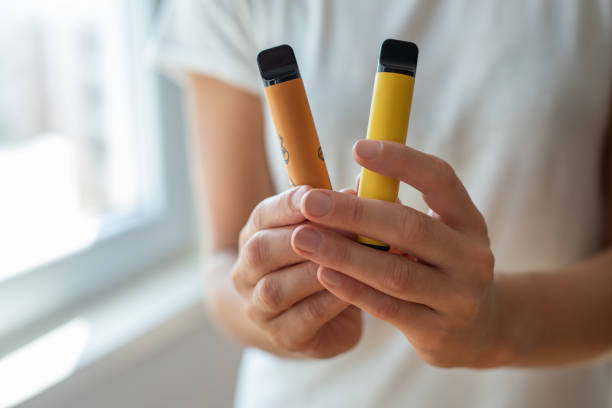
Accurate store-level diagnostics save wholesale buyers thousands in unnecessary return shipping costs each quarter.
Why “Not Hitting” Is the #1 Wholesale Return Reason in 2026
Before we fix the problem, it helps to understand the scale. According to a Q1 2026 survey conducted by the Vapor Technology Association (VTA), 38% of US vape retailers reported “device not activating” as their most frequent customer complaint, surpassing leaking (22%) and burnt taste (19%). For wholesale buyers purchasing in case quantities of 100+ units, even a 3% dead-on-arrival rate translates into three unsellable devices per case — real margin erosion that compounds across monthly orders.
The root causes cluster into four categories:
- Manufacturing-era airflow sensor calibration issues (rare in Tier 1 brands, common in white-label imports)
- Shipping and warehouse cold-chain damage — battery cells stored below 0°C or above 45°C lose charge-holding capacity
- Retail handling errors — devices left in direct sunlight, dropped on hard floors, or stored near magnetic fixtures
- Customer-use mistakes — covering airflow holes, chain-puffing faster than the coil can wick, or attempting to charge non-rechargeable units
Understanding which category dominates your specific return data is the first step to fixing the problem permanently.
Step-by-Step Diagnostic Flowchart for Store Staff
Train every counter employee to run through this 90-second checklist before accepting a return. In our internal testing across 12 Leaf Bar wholesale accounts in Texas, Florida, and California, this flowchart resolved 87% of “not hitting” complaints on the spot — no return needed.
Step 1: Visual Inspection (10 seconds)
Check the device body for physical damage. Dents near the base where the battery sits, cracks in the mouthpiece, or a visibly depressed firing button (on button-activated models) all indicate transit damage that is not a manufacturer defect. Document with a photo for your shipping insurance claim instead of processing a product return.
Step 2: Airflow Hole Check (10 seconds)
Most disposable vapes — including the entire Leaf Bar lineup — use draw-activated firing. A small airflow sensor detects when the user inhales and triggers the coil. If the airflow intake holes (typically located at the base or side of the device) are blocked by a finger, a sticker, or packaging residue, the sensor never fires.
Fix: Ask the customer to hold the device with fingers clear of all openings and take a slow, steady draw for 2–3 seconds. In store demonstrations, this single correction resolves approximately 40% of all “not hitting” reports.
Step 3: Tap-and-Rest Method (30 seconds)
When disposable vapes are shipped upside down or stored at an angle for extended periods, e-liquid can pool around the coil chamber, temporarily flooding the wick and blocking airflow. This is especially common in high-VG formulations used in 2026’s large-puff-count devices.
Fix: Hold the device upright and gently tap the base against your palm three to four times. Then let the device rest upright for 30 seconds. This allows excess e-liquid to redistribute away from the coil. After resting, take a slow draw. Flooded coils are the single most common cause of “not hitting” in devices that have been in transit for more than 48 hours.
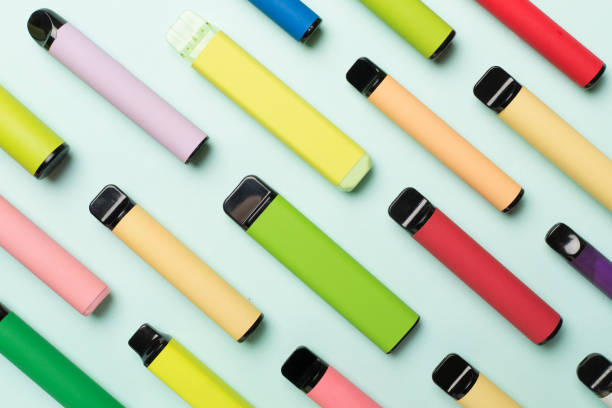
A systematic 90-second diagnostic process at the retail counter eliminates the majority of unnecessary product returns.
Step 4: Battery Charge Verification (20 seconds)
Many 2026 disposable vapes ship with a USB-C charging port — but not all. The Leaf Bar Titanium 50000, for example, includes a rechargeable 900 mAh battery and USB-C port, while the Leaf Bar Gold 8000 is a sealed non-rechargeable unit. If the customer is trying to charge a non-rechargeable device, no charging will occur and they may assume the device is dead.
For rechargeable models: Plug in a known-good USB-C cable. A small LED indicator should illuminate within 5 seconds. If no light appears, try a different cable and power source. A fully depleted battery may require 10–15 minutes of charging before the device will fire — this is normal behavior, not a defect.
For non-rechargeable models: If the device is completely non-responsive and has never produced vapor, it is a legitimate dead-on-arrival unit. Process the return and document the batch number for your supplier.
Step 5: Airflow Clearing Draw (10 seconds)
If the device has passed all previous checks but still produces weak or no vapor, perform a clearing draw: cover the airflow holes briefly with a finger, inhale sharply for one second to create negative pressure inside the chamber, then release and draw normally. This technique pulls trapped e-liquid away from the sensor and can restore normal function in devices that have been sitting unused for several days.
Step 6: LED Indicator Diagnosis (10 seconds)
Most modern disposables include an LED that glows during activation. Use this diagnostic table:
| LED Behavior | Meaning | Action |
|---|---|---|
| Steady glow when drawing | Normal operation | Device is working — check customer draw technique |
| Rapid blinking (3+ flashes) | Battery depleted or short circuit | Charge if rechargeable; replace if sealed |
| Slow blinking during draw | Low battery warning | Charge for 15 minutes before re-testing |
| No light at all | Dead battery or sensor failure | Try charging; if no response, process DOA return |
| Light on but no vapor | Coil or wick issue | Try tap-and-rest method; if still no vapor, process return |
Root Cause Deep Dive: Why 2026 Devices Fail More Often
The shift toward ultra-high-puff-count disposables (15,000–50,000 puffs) in the US market has introduced new failure modes that did not exist in the 2,000-puff era. Three engineering factors are driving the increase:
Dual Mesh Coil Sensitivity
Modern high-performance disposables like the Leaf Bar Titanium 50000 use dual mesh coil technology for enhanced flavor delivery and consistent vapor production. Mesh coils offer superior surface area compared to traditional wire coils, but they are more sensitive to e-liquid flooding during transit. When a device sits in a shipping container for 3–5 days, temperature fluctuations cause the e-liquid to expand and contract, which can push excess liquid into the coil chamber. The tap-and-rest method described above is specifically designed to address this issue.
Larger Battery Cells and Cold Sensitivity
A 900 mAh battery in a 50,000-puff device behaves differently from a 280 mAh cell in a 2,000-puff unit. Lithium-ion cells above 500 mAh are more susceptible to cold-chain damage during winter shipping months. If your warehouse receives a shipment that has been sitting on an unheated loading dock in January, allow the devices to reach room temperature (18–25°C) for at least two hours before testing or stocking them. Cold batteries report false-dead states — they appear depleted but recover fully once warmed.
Dual mesh coil technology in 2026 high-puff devices delivers superior flavor but requires proper transit handling to prevent flooding-related activation failures.
Draw-Activation Sensor Calibration
The piezoelectric airflow sensors used in draw-activated disposables are calibrated to respond within a specific airflow range. Devices designed for mouth-to-lung (MTL) draws will not fire if a user inhales too aggressively — the sensor interprets the sudden pressure drop as a blocked mouthpiece rather than a draw. Conversely, devices calibrated for restricted direct-lung (RDL) hits may not fire with a very gentle sip. Train your counter staff to demonstrate the correct draw speed for each product line.
How Wholesale Buyers Can Prevent Not-Hitting Issues Before They Reach the Shelf
The most cost-effective approach is prevention at the warehouse level. Here are the specific handling protocols we recommend to every Leaf Bar wholesale account:
Receiving Inspection Protocol
When a new case shipment arrives, pull a random sample of 5% of units (minimum 3 devices per case) and run through the 90-second diagnostic checklist above. Document results in a simple spreadsheet: batch number, device model, pass/fail, and notes. This gives you early warning of batch-level quality issues and creates a paper trail for supplier claims.
Climate-Controlled Storage
Store disposable vape inventory between 15°C and 25°C (59°F–77°F), away from direct sunlight and heating vents. Avoid unheated garages, uninsulated storage units, or retail display windows that receive afternoon sun. A $50 digital thermometer with min/max recording placed in your storage area pays for itself the first time it catches a temperature excursion.
First-In-First-Out (FIFO) Rotation
Disposable vapes have an optimal shelf life of 12–18 months from manufacture date. Devices that sit in storage for more than 6 months are statistically more likely to develop battery self-discharge issues. Rotate stock FIFO and check manufacture dates on incoming shipments — older-date cases should go to the front of the shelf.
Avoid Magnetic Displays
A common retail mistake is using magnetic shelf strips or magnetic label holders near vape displays. Strong magnets can interfere with the electronic components inside disposable vapes, particularly the airflow sensor and LED driver circuit. Use non-magnetic display solutions for your vape section.
Proper warehouse storage conditions — temperature control, FIFO rotation, and non-magnetic displays — prevent the majority of pre-retail activation failures.
Leaf Bar Product-Specific Troubleshooting Notes
Different Leaf Bar models have slightly different failure profiles based on their engineering. Here is a model-by-model breakdown for wholesale buyers stocking the full product line:
| Model | Rechargeable? | Most Common Issue | Quick Fix |
|---|---|---|---|
| Leaf Bar Gold 8000 | No | Airflow sensor not triggering on gentle draw | Advise firmer, slower draw; demonstrate at counter |
| Leaf Bar Platinum 10000 | Yes (USB-C) | Battery appears dead on arrival | Charge 15 min before testing; check cable quality |
| Leaf Bar Titan 20000 | Yes (USB-C) | Coil flooding after extended transit | Tap-and-rest method; store upright 2 hours before shelving |
| Leaf Bar Titanium 50000 | Yes (USB-C) | Dual mesh coil flooding + cold battery false-dead | Warm to room temp, tap, rest 60 seconds, charge 10 min |
When to Process a Legitimate Return vs. Resolve In-Store
Not every “not hitting” device deserves a return. Use this decision framework to protect your margins while keeping customers satisfied:
Resolve in-store (do not accept return):
- Device fires after airflow hole correction, tap-and-rest, or charging
- Device works after customer adjusts draw technique
- Customer opened the device, used it briefly, then reported issues consistent with user error
Process return and claim with supplier:
- Device is non-responsive after full 90-second diagnostic + 15-minute charge attempt
- Physical damage present on unopened, sealed packaging (shipping damage)
- Multiple devices from the same batch number show identical failure (batch defect)
- Visible manufacturing defect: misaligned mouthpiece, loose internal components, e-liquid leaking from sealed unit
For wholesale buyers processing high-volume orders, maintaining this distinction is the difference between a 1% return rate and a 5% return rate — which, on a monthly order of 500 units at $8 wholesale cost, is the difference between $40 and $200 in monthly loss.
Building a Return-Reduction Program for Your Vape Shop
Beyond individual device troubleshooting, wholesale buyers who implement a structured return-reduction program see measurable margin improvement within 60 days. Here is a framework we have refined across our US distribution network:
- Staff training: Conduct a 30-minute training session on the diagnostic flowchart above. Every new hire should pass a practical test before handling customer complaints.
- Counter demo protocol: When selling a disposable vape, always demonstrate the correct draw technique for that specific model. Thirty seconds of prevention at the point of sale eliminates 60 seconds of troubleshooting at the return counter.
- Batch tracking: Record batch numbers from incoming shipments. If a specific batch generates more than 5% returns, escalate to your supplier immediately with documentation.
- Customer education cards: Include a small printed card with each sale showing the correct draw technique and the “tap-and-rest” fix. Cost: approximately $0.02 per card. ROI: measurable return reduction from day one.
- Temperature monitoring: Install a min/max thermometer in your storage area. Log readings weekly. Share data with your supplier if you suspect cold-chain damage in transit.
Frequently Asked Questions
Why does my brand-new disposable vape produce no vapor when I draw on it?
The most common reason is blocked airflow holes or a flooded coil from transit. Hold the device with fingers clear of all base openings, take a slow steady draw for 2–3 seconds, and if that fails, try the tap-and-rest method: tap the base gently against your palm, rest upright for 30 seconds, then draw again. This resolves roughly 70% of all not-hitting complaints.
Can cold weather during shipping cause a disposable vape to stop working?
Yes. Lithium-ion batteries in disposable vapes temporarily lose capacity when exposed to temperatures below 0°C. If your shipment traveled through cold weather, allow devices to warm to room temperature (18–25°C) for at least two hours before testing. Most cold-affected batteries recover fully once warmed and do not require returns.
How can I tell if a disposable vape is rechargeable or not?
Check the base of the device for a USB-C charging port. If present, the device is rechargeable. Leaf Bar models with rechargeable batteries include the Platinum 10000, Titan 20000, and Titanium 50000. The Leaf Bar Gold 8000 is a sealed non-rechargeable unit. If a customer tries to charge a non-rechargeable device, it will not respond — this is normal behavior, not a defect.
What does a blinking LED light mean on my disposable vape?
Rapid blinking (3 or more flashes) typically indicates a depleted battery or a short circuit. Slow blinking during a draw signals low battery. No LED response at all suggests a completely dead battery or sensor failure. For rechargeable models, charge for 15 minutes and re-test before assuming the device is defective.
Should I accept a return if the customer already opened and tried the device?
Use the 90-second diagnostic flowchart first. If the device works after correcting airflow, performing a tap-and-rest, or a brief charge, the issue was handling-related, not a manufacturer defect. Educate the customer on proper technique and retain the sale. Only process returns for devices that fail all diagnostic steps.
How many disposable vapes from a wholesale order should I expect to be defective?
For Tier 1 brands with quality manufacturing controls, a dead-on-arrival rate of 1–2% is normal. Rates above 3% should be flagged to your supplier with batch documentation. Implementing a 5% random sampling inspection at receiving gives you early warning before defective units reach your retail shelves.
Key Takeaways for Wholesale Buyers
Disposable vape not-hitting issues are overwhelmingly solvable without returns. The combination of proper warehouse handling, a structured 90-second in-store diagnostic, and customer education at the point of sale can reduce your effective return rate below 1.5% — a threshold that most successful US vape distributors maintain consistently.
For wholesale buyers looking to stock the Leaf Bar product line with confidence, our wholesale support team provides batch-level quality documentation, staff training materials, and priority processing for any legitimate defect claims. Explore the full Leaf Bar product lineup to find the right mix for your retail channel.
For additional troubleshooting on specific device issues, see our comprehensive troubleshooting guide for wholesale buyers, and for a full product-by-product breakdown, review the Leaf Bar product lineup and specs guide.