

Disposable Vape Chip Control Technology 2026: Smart Features, Safety Engineering, and Wholesale Implications for US Distributors
By Leaf Bar Wholesale Insights Team | July 30, 2026

Modern disposable vapes increasingly rely on integrated chip control systems to manage power delivery, safety cutoffs, and puff monitoring.
When US wholesale buyers evaluate disposable vape inventory, most focus on puff count, nicotine strength, and flavor range. Those are visible features. But the invisible component — the microcontroller unit (MCU) or “chip” — quietly determines whether a device delivers consistent vapor quality, protects end users from safety hazards, and ultimately reduces your return rate. Understanding vape chip control technology is no longer optional for serious distributors. It is the difference between stocking a product that sells reliably and one that generates customer complaints.
This guide breaks down how chip control systems work in disposable vapes, why they matter for wholesale economics, and what questions every distributor should ask their supplier before placing a bulk order in 2026.
What Exactly Is a Disposable Vape Chip Control System?
A disposable vape chip — sometimes called the MCU, smart chip, or control board — is a tiny integrated circuit embedded in the device’s hardware. Unlike the large, user-programmable boards found in reusable mods, disposable vape chips are purpose-built for a single product lifecycle. Their job is to manage the device’s electrical and mechanical functions from the first puff to the last.
A typical disposable vape chip handles the following core tasks:
- Power regulation: Managing voltage output from the battery to the coil so that vapor production stays consistent as battery charge depletes
- Puff counting: Tracking the number of activations to enforce the advertised puff count and prevent overuse beyond the e-liquid supply
- Safety cutoffs: Triggering automatic shutoff when the device detects overheating, short circuits, over-discharge, or excessive draw duration
- LED control: Driving status indicator lights that communicate battery level, device status, or activation feedback
- Draw-activation sensing: Processing the airflow sensor signal to fire the coil precisely when the user inhales — not before and not with a delay
The sophistication of these functions varies dramatically across manufacturers. Some budget devices use bare-minimum analog circuits with no programmable chip at all, while premium brands invest in custom MCU firmware that fine-tunes every parameter.
Chip vs. No-Chip: Why the Difference Matters for Wholesale Buyers
Not all disposable vapes on the US market contain a true chip control system. Some lower-cost manufacturers rely on simple analog circuits — resistors and capacitors arranged to approximate basic functions — without any programmable logic. The performance gap between these approaches is significant.
| Feature | Analog Circuit (No Chip) | MCU Chip Control |
|---|---|---|
| Voltage consistency | Degrades as battery drains; noticeable flavor/throat hit change after 60% depletion | Regulated output maintains consistent vapor from first to last puff |
| Puff count accuracy | Often 15-25% fewer puffs than advertised | Within 5-10% of advertised count |
| Auto-fire protection | None or basic thermal fuse only | Active cutoff at 10-second draw, short circuit, and thermal threshold |
| Dry hit prevention | No detection; user burns wick when e-liquid runs low | Some chips detect resistance changes and reduce power or shutoff before dry hit |
| Battery management | Basic over-discharge protection via voltage cutoff | Full BMS: overcharge, over-discharge, short circuit, temperature monitoring |
| Typical return rate | 3-8% of units in wholesale batches | 0.5-2% of units in wholesale batches |
For wholesale buyers, this table translates directly to dollars. A 3% return rate on a 1,000-unit order means 30 devices that come back as defective — each one costing you handling time, shipping, and customer goodwill. Chip-controlled devices reduce that burden substantially.
The Five Core Functions of Modern Vape Chip Control
1. Intelligent Power Delivery and Voltage Regulation
The most important function of any vape chip is power regulation. A lithium-ion battery’s voltage drops continuously as it discharges — from roughly 4.2V fully charged to about 3.0V when depleted. Without regulation, the coil receives less and less power over time, producing weaker vapor, muted flavor, and an inconsistent throat hit.
Chip-controlled devices use a boost or buck-boost converter to maintain a constant output voltage regardless of battery state. This means the 500th puff tastes nearly identical to the first puff. For wholesale buyers evaluating product quality, this consistency is the single biggest differentiator between premium and budget disposable vapes.
2. Puff Count Enforcement and E-Liquid Management
Modern vape chips include a puff counter that tracks each activation event. This serves two purposes: it ensures the device delivers the advertised puff count before shutting down, and it prevents users from consuming beyond the e-liquid reservoir — which would cause dry hits and potential coil damage.
More advanced chips calibrate puff duration to account for different inhalation patterns. A short 1.5-second draw and a long 4-second draw consume different amounts of e-liquid, and smart chips weight these accordingly rather than counting every activation as one puff regardless of duration.
3. Multi-Layer Safety Circuitry

Chip-based safety systems provide multiple protection layers that analog circuits cannot replicate.
Safety engineering is where chip control technology delivers its most critical value. A properly programmed MCU implements at minimum the following protection layers:
- Over-puff cutoff: Shuts off the coil after 8-10 seconds of continuous activation to prevent overheating
- Short circuit detection: Monitors coil resistance in real time and cuts power if resistance drops below safe thresholds
- Over-temperature protection: Uses internal resistance measurements (or dedicated thermal sensors in premium models) to detect excessive heat buildup
- Low voltage lockout: Prevents the battery from discharging below the minimum safe voltage, which reduces the risk of cell damage or thermal runaway
- Overcurrent protection: Limits maximum current draw to protect both the battery and coil from excessive stress
These protections are especially relevant for US wholesale buyers because of regulatory scrutiny. The FDA’s Center for Tobacco Products monitors device safety incidents, and CPSC (Consumer Product Safety Commission) can issue recalls for devices that pose fire or burn hazards. Distributors who stock chip-controlled devices with documented safety features face significantly lower regulatory risk.
4. Draw-Activation Sensor Precision
Most disposable vapes use a pressure-sensitive airflow sensor to detect when the user inhales. Without chip management, these sensors can be unreliable — triggering from pocket pressure, producing delayed activation, or failing to fire on gentle draws.
A well-programmed chip adds signal processing to the raw sensor input: debouncing to eliminate false triggers, threshold calibration to match the specific airflow design of the device, and timing logic to ensure the coil fires for the correct duration. The result is a responsive, predictable draw that feels natural to the user.
5. LED Status Communication
While it may seem minor, the LED system on a disposable vape is chip-controlled and plays a meaningful role in user experience. Modern chips drive LED patterns that communicate battery status (solid vs. blinking), activation confirmation, low battery warning, and end-of-life indication. Devices without proper chip control often have LEDs that behave erratically — blinking randomly, staying lit when the device is idle, or failing to indicate low battery before the device stops working.
How Leaf Bar Implements Chip Control Technology

Premium brands invest in custom MCU firmware to fine-tune power delivery, safety cutoffs, and puff monitoring across their entire product range.
Across the Leaf Bar product lineup — from the entry-level Gold 8000 to the flagship Titanium 50000 — every device ships with integrated MCU chip control. This is not a premium-only feature reserved for the highest-puff models. Here is how chip technology scales across the range:
- Gold 8000: Core chip functions — regulated power delivery, 10-second over-puff cutoff, short circuit protection, LED battery indicator. Designed for reliable performance in the entry-level wholesale segment where consistency drives repeat purchases.
- Platinum 10000: All Gold 8000 features plus calibrated puff counting with duration weighting, improved draw-activation sensitivity, and low-voltage early warning via LED pattern change.
- Titan 20000: Enhanced chip firmware with adaptive power management that adjusts voltage delivery as the dual mesh coil heats up over extended sessions, reducing the likelihood of dry hits during chain use.
- Titanium 50000: Full-featured smart chip with all previous protections plus advanced battery management system (BMS) optimized for the 900mAh battery, intelligent e-liquid monitoring, and the most precise puff count calibration in the lineup.
For wholesale buyers, this consistent chip standardization across the full product range means that regardless of which Leaf Bar model you stock, you get the same fundamental safety and performance engineering. This simplifies staff training and customer support — your team learns one quality standard, not four different behavior profiles.
The Wholesale Economics of Chip Quality
Chip control technology affects wholesale profitability in ways that extend far beyond the manufacturing cost of the chip itself. Here is the real cost breakdown that distributors should evaluate:
| Cost Factor | Budget Device (No/Basic Chip) | Chip-Controlled Device |
|---|---|---|
| Per-unit chip cost delta | $0 (analog circuit) | +$0.15 to $0.40 per unit |
| Average return rate | 3-8% | 0.5-2% |
| Return handling cost per unit | $3-5 (shipping + labor + replacement) | $3-5 (same per return, but far fewer returns) |
| Net return cost per 1,000 units | $90-400 | $15-100 |
| Customer complaint rate | Higher; inconsistent performance | Lower; consistent experience |
| Repeat purchase rate | Lower due to variable quality | Higher due to reliable experience |
The math is clear. A $0.20 chip cost increase per unit saves $75-300 in return costs per 1,000 units — a net positive ROI of 3.75x to 15x on the chip investment alone. When you factor in higher customer retention and lower complaint volume, the economic case for chip-controlled devices becomes overwhelming.
What Wholesale Buyers Should Ask Suppliers About Chip Technology
Before committing to a new supplier or product line, incorporate these chip technology questions into your due diligence process:
- Does the device use a programmable MCU or analog circuit? If the supplier cannot answer this clearly, treat it as a red flag. Reputable manufacturers know exactly what chip platform they use.
- What specific safety protections are firmware-enforced? Look for: over-puff cutoff (specify duration), short circuit detection, over-temperature protection, low voltage lockout. A vague answer like “it has safety features” is insufficient.
- How is puff count calibrated? The best chips account for draw duration variation. Simple chips count every activation as one puff regardless of whether it was 1 second or 4 seconds.
- Is the power delivery regulated or unregulated? Regulated output (constant voltage throughout battery life) is the standard for quality devices. Unregulated output degrades user experience as the battery drains.
- Can you provide documentation of the chip’s safety certifications? CE, FCC, and UL marks on the chip itself (not just the finished device) indicate that the core control system has been independently tested.
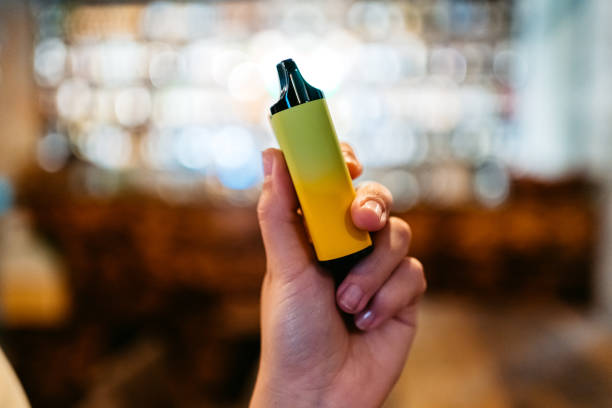
Professional wholesale buyers increasingly require chip-level documentation as part of supplier due diligence.
Chip Technology and Regulatory Compliance in 2026
The intersection of chip technology and regulatory compliance is becoming tighter every year. Several developments make chip control relevant to compliance:
- FDA PMTA requirements: Devices submitted for Premarket Tobacco Product Application review must demonstrate consistent performance characteristics. Chip-controlled devices produce more predictable and documentable performance data, which strengthens PMTA submissions.
- State-level safety mandates: States including California, New York, and several others are implementing or considering requirements for battery management and device safety features that effectively mandate chip control.
- UL 8139 standard: This safety standard for electronic cigarettes and vaporizers tests electrical safety, battery management, and thermal protection — all areas where chip-controlled devices perform better than analog alternatives.
- CPSC incident reporting: Devices with fewer safety incidents (the norm for chip-controlled products) generate fewer mandatory incident reports, reducing regulatory exposure for distributors.
For wholesale buyers, stocking chip-controlled devices now is a forward-looking compliance strategy. As regulation tightens, devices without proper electronic safety management will face increasing market access restrictions.
Next-Generation Chip Features Coming to Disposable Vapes
The disposable vape chip technology landscape is evolving rapidly. Several advanced features are already appearing in premium devices and will likely become standard within the next 12-18 months:
- Adaptive mesh coil management: Chips that dynamically adjust power output based on real-time coil resistance measurements, optimizing flavor and vapor production throughout the coil’s lifespan
- Usage pattern learning: MCUs that track individual user puff patterns and adjust activation sensitivity and power delivery to match the user’s inhalation style
- E-liquid level estimation: Resistance-based sensing that estimates remaining e-liquid volume and provides low-liquid warnings before dry hits occur
- Bluetooth connectivity: Some manufacturers are exploring low-energy Bluetooth chips that allow users to check device status via smartphone apps — a feature that could differentiate inventory in competitive retail environments
While these advanced features add cost, they also create retail differentiation opportunities. Smoke shop owners who can demonstrate smart features to customers command higher margins and stronger brand loyalty.
Practical Wholesale Decision Framework
Based on chip technology quality, here is a practical framework for evaluating disposable vape inventory decisions:
Tier 1 — Full MCU chip control with documented safety features. These devices carry the lowest risk, lowest return rates, and highest customer satisfaction. Prioritize this tier for your core inventory. Leaf Bar’s entire product range falls in this category.
Tier 2 — Basic chip with limited programmability. Acceptable for secondary inventory or price-sensitive markets, but expect slightly higher return rates. Verify that at minimum over-puff cutoff and short circuit protection are present.
Tier 3 — Analog circuit with no programmable chip. Avoid for wholesale distribution. The higher return rate and customer complaint volume typically erase any per-unit cost savings. These devices also carry higher regulatory risk as safety standards tighten.
Conclusion
Chip control technology is the invisible backbone of disposable vape quality. It determines whether a device delivers consistent flavor from first puff to last, whether it protects users from safety hazards, and whether it generates returns or repeat purchases for your business. As the US wholesale market matures and regulatory scrutiny intensifies, the gap between chip-controlled and non-chip devices will only widen.
For wholesale buyers evaluating their 2026 inventory strategy, the question is no longer whether chip technology matters — it is how thoroughly you verify chip quality before placing your next order. The suppliers who invest in proper MCU firmware and safety engineering are the ones whose products will survive the next wave of regulation and the next round of consumer expectations.
If you are evaluating disposable vape suppliers for your wholesale operation, contact the Leaf Bar wholesale team to discuss our chip-controlled product lineup and how our engineering standards translate to lower return rates and higher margins for your business.
Frequently Asked Questions
Can you tell if a disposable vape has a chip without opening it?
Yes, through simple performance tests. A chip-controlled device delivers consistent vapor quality throughout its battery life, has a precise puff count that matches the advertised number, and shows clear LED behavior patterns (solid for active, blinking for low battery, off when idle). Devices with analog circuits show declining vapor quality as the battery drains and often deliver significantly fewer puffs than advertised.
Does chip control technology affect the flavor of a disposable vape?
Indirectly, yes. A regulated chip ensures the coil receives consistent power throughout the device’s life, which means the flavor profile stays stable from the first puff to the last. Without regulation, the coil temperature drops as battery voltage decreases, producing progressively weaker and less flavorful vapor — especially noticeable after the device is about 60% depleted.
Are chip-controlled disposable vapes more expensive at wholesale?
Marginally — typically $0.15 to $0.40 more per unit at the manufacturing level. However, the lower return rate (0.5-2% vs. 3-8%), higher customer satisfaction, and better repeat purchase rates make chip-controlled devices significantly more profitable on a per-unit-sold basis. The net economics strongly favor chip-controlled products.
Do FDA regulations require chips in disposable vapes?
Currently, FDA does not explicitly mandate chip control technology by name. However, PMTA requirements for consistent performance data, battery safety standards, and the UL 8139 testing framework all create strong regulatory incentives that effectively favor chip-controlled devices. State-level legislation is moving in this direction as well.
How does chip technology relate to the dual mesh coil in Leaf Bar devices?
The dual mesh coil and the MCU chip work together as an integrated system. The chip regulates power delivery to the dual mesh coil, ensuring both mesh elements receive balanced current for even heating. It also monitors the coil’s resistance changes over time to detect when the e-liquid is running low. Without chip management, a dual mesh coil system would be more prone to uneven heating and premature dry hits than a simpler single-coil design.
What should I do if a customer returns a device claiming it stopped working early?
First, check the LED behavior — a chip-controlled device will typically flash a specific pattern to indicate end-of-life versus a malfunction. If the device reached its programmed puff count, it is functioning as designed. If it stopped significantly short of the advertised count, contact your supplier with the batch number. Reputable manufacturers with chip-controlled devices can often trace the issue to a specific production batch and provide replacement or credit.