

If you run a smoke shop, vape store, or distribution business in the United States, understanding how wholesale pricing actually works behind the scenes is the single most profitable skill you can develop in 2026. Retailers who simply accept the first price they see leave thousands of dollars on the table every quarter.
This guide breaks down the real economics of disposable vape wholesale pricing in 2026 — from factory floor to cash register — so you can negotiate smarter, stock better, and protect your margins even as the market shifts.

Understanding wholesale pricing tiers is essential for maximizing vape business profitability.
How Disposable Vape Wholesale Pricing Actually Works
Most wholesale buyers focus entirely on the per-unit cost a supplier quotes them. But that number is only one piece of a much larger pricing architecture that includes shipping, duties, payment terms, volume incentives, and after-sales support costs that directly affect your true landed cost per unit.
In the current 2026 market, disposable vape wholesale pricing follows a tiered structure that rewards volume commitment and long-term supplier relationships. Understanding each tier — and knowing where your order volume places you — determines whether you operate on razor-thin margins or genuinely profitable ones.
The Three Pricing Tiers Every Distributor Should Know
| Pricing Tier | Typical MOQ Range | Discount vs. MSRP | Best For |
|---|---|---|---|
| Tier 1 — Entry Level | 50–199 units | 25–35% off MSRP | New single-store operators testing the market |
| Tier 2 — Growth | 200–999 units | 35–50% off MSRP | Regional chains and established multi-store owners |
| Tier 3 — Volume | 1,000+ units | 50–65% off MSRP | Importers, large distributors, and national accounts |
These tiers are not arbitrary. They reflect the supplier’s actual cost structure: manufacturing economies of scale, packaging standardization at higher volumes, and the reduced per-unit logistics cost when shipments fill full pallets or containers rather than individual cartons.
Breaking Down the True Cost Per Unit
The sticker price your supplier quotes is just the beginning. To calculate your real wholesale cost and project actual profit margins, you need to account for every expense that stacks on top of that base number.
Cost Components That Most Buyers Overlook
Shipping and logistics typically adds $0.30 to $1.20 per unit depending on your order volume and delivery location. Consolidated shipments to a single warehouse location cut this dramatically compared to drop-ship arrangements to individual stores.
Payment terms carry an implicit cost that many wholesalers ignore. A supplier offering 2% net-30 terms is effectively giving you a 2% discount for early payment — or charging you 2% more if you run to 60 days. Wire transfer fees, credit card processing surcharges, and currency conversion costs (for imported products) all chip away at margins.
Compliance and documentation costs have escalated significantly since 2024. PMTA compliance verification, state-level registration fees, and required tax stamps in certain jurisdictions add between $0.15 and $0.50 per unit when averaged across a typical wholesale order.

A thorough cost-per-unit analysis reveals the true profitability of each wholesale order.
2026 Market Pricing Benchmarks
To help you benchmark your current pricing against the broader market, the following data reflects typical wholesale price ranges for popular disposable vape categories as of mid-2026. These figures are compiled from industry reports and verified distributor feedback across multiple US regions.
| Puff Count Category | Typical Wholesale Price | Standard Retail Price | Gross Margin Range |
|---|---|---|---|
| 5,000–8,000 puffs | $4.50 – $7.00 | $12.99 – $16.99 | 45% – 58% |
| 10,000–15,000 puffs | $6.50 – $10.00 | $17.99 – $24.99 | 48% – 62% |
| 20,000–25,000 puffs | $8.50 – $13.00 | $22.99 – $32.99 | 50% – 65% |
| 30,000–50,000 puffs | $10.00 – $16.00 | $27.99 – $39.99 | 52% – 68% |
Two critical observations from this data stand out. First, higher-puff-count devices consistently deliver stronger percentage margins — meaning a store that shifts its mix toward premium 20K+ devices earns more profit per unit sold without requiring more shelf space. Second, the absolute dollar margin on a single 50,000-puff device ($14–$24 per unit) often exceeds the total margin on selling three entry-level devices.
Pricing Negotiation Strategies That Actually Work in 2026
Negotiating wholesale pricing is not about aggressive haggling — it is about demonstrating value to your supplier. The distributors who consistently secure the best pricing share specific behavioral patterns that any buyer can replicate.
Strategy 1: Consolidate Orders Across Flavors
Suppliers price each SKU independently, and small orders of many individual flavors trigger higher per-unit costs. Instead of ordering 20 flavors at 25 units each (500 total, 5 different case configurations), consolidate to 8–10 top-performing flavors at 50–60 units each. Same total volume, fewer case breaks, and suppliers routinely offer 3–7% better pricing on consolidated flavor orders because their own warehouse picking costs drop.
Strategy 2: Commit to Quarterly Forecast Volumes
When you provide a written quarterly purchase forecast — even a rough one — suppliers can plan their own production runs and raw material procurement more efficiently. Many manufacturers offer 5–10% additional discounts for buyers who commit to quarterly minimums with scheduled delivery dates, because it eliminates demand uncertainty on their end.
Strategy 3: Leverage New Product Launch Windows
When a brand launches a new model or flavor line, initial wholesale pricing is almost always more aggressive than long-term pricing. Suppliers want fast market penetration and retailer commitment during launch windows. Timing your new product introductions to align with these launch periods can lock in pricing that remains competitive for 6–12 months before market adjustment.
Strategy 4: Negotiate Total Value, Not Just Unit Price
The smartest wholesale buyers in 2026 negotiate packages rather than single numbers. A 3% reduction in per-unit cost matters less than free shipping on orders over 500 units, 60-day payment terms instead of 30, a co-op advertising allowance, or priority allocation during supply shortages. Evaluate the total economic value of every supplier relationship, not just the sticker price.
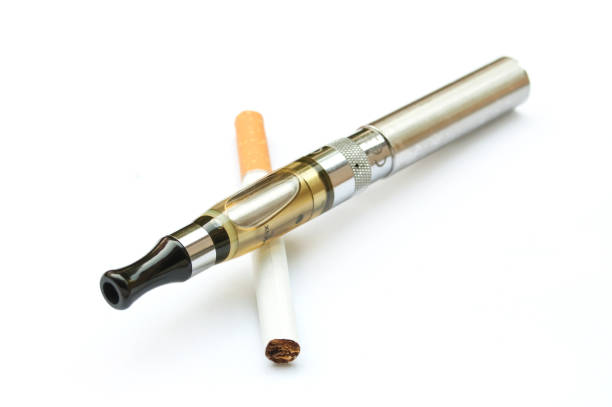
Effective negotiation focuses on total value rather than chasing the lowest per-unit price.
How Geography Affects Your Wholesale Costs
Your warehouse location, shipping routes, and local regulatory environment create meaningful pricing variations that most online pricing guides completely ignore. Understanding these geographic cost factors gives you a real competitive advantage.
West Coast distributors benefit from proximity to Pacific shipping routes for imported products, reducing inbound logistics costs by an estimated $0.20–$0.50 per unit compared to East Coast counterparts. However, California’s specific tax structure and Proposition 65 compliance costs offset a portion of this advantage.
East Coast and Southeast distributors face higher inbound shipping costs but benefit from denser retail populations per square mile, meaning lower last-mile distribution costs per unit. States like Florida, Texas, and Georgia also have more favorable wholesale tax structures for multi-state distributors.
Midwest distributors occupy the strategic middle ground — moderate inbound shipping costs plus the ability to serve both coasts with reasonable delivery timelines. Several industry analysts note that central distribution hubs in states like Tennessee and Ohio are emerging as the most cost-effective locations for national wholesale operations.
Pricing Strategy by Business Type
Different business models require fundamentally different pricing approaches. A single-store owner negotiating for 100 units operates in a completely different pricing universe than a multi-state distributor ordering 10,000 units monthly. Here is how to optimize pricing for your specific business type.
Single Store Operators (1–3 Locations)
Focus on securing Tier 2 pricing by joining purchasing cooperatives or distributor networks that aggregate buying power across multiple independent stores. Many successful single-store owners report achieving 38–45% below MSRP through co-op buying arrangements that individual orders cannot match.
Regional Chains (4–20 Locations)
You occupy the sweet spot for direct manufacturer relationships. With 4–20 stores consuming 400–2,000+ units monthly, you can bypass intermediate distributors entirely and negotiate directly with brands or authorized master distributors. This typically adds 8–15% margin compared to buying through middlemen.
Online and Hybrid Retailers
E-commerce operations face unique pricing dynamics: higher customer acquisition costs but lower overhead per sale. Successful online vape retailers in 2026 typically target 42–55% gross margins and focus heavily on bundle pricing, subscription models, and loyalty programs that increase customer lifetime value rather than maximizing per-unit margin.
Importers and Large-Scale Distributors
At the 1,000+ unit level, pricing conversations shift entirely toward container economics. Full container loads of 30,000–50,000 units achieve the lowest possible per-unit cost, and the negotiation focus moves to payment terms (LC vs. TT), quality guarantee provisions, exclusive territory agreements, and co-branding or private label pricing structures.

Different business models demand distinct pricing strategies for maximum profitability.
The Profitability Formula: Pricing, Turnover, and Mix
Wholesale pricing only matters in the context of sell-through velocity and product mix optimization. A device with a 60% margin that sits on your shelf for 45 days generates less annual profit than a 48% margin device that turns over every 12 days.
Calculate your GMROI (Gross Margin Return on Inventory Investment) for each product category:
GMROI = (Gross Margin % × Annual Sales) / Average Inventory Cost
Successful vape distributors in 2026 target a GMROI of 2.5 or higher. If your current inventory mix falls below that threshold, the problem is usually not wholesale pricing — it is product selection and inventory turnover management.
Common Pricing Mistakes That Destroy Margins
After analyzing wholesale pricing patterns across hundreds of US vape distributors, four pricing mistakes appear consistently among businesses that struggle with profitability.
Mistake 1: Chasing the lowest unit price. The cheapest supplier often delivers the highest total cost once you factor in inconsistent quality, frequent stockouts, slow shipping, and zero after-sales support. Price-per-unit is one input into a total cost equation, not the equation itself.
Mistake 2: Ignoring puff-per-dollar economics. A $6 device with 8,000 puffs costs $0.00075 per puff. A $12 device with 50,000 puffs costs $0.00024 per puff — more than three times more efficient. Customers increasingly understand this math, and stores that stock high-puff devices at fair wholesale prices see stronger repeat business.
Mistake 3: Static pricing in a dynamic market. Wholesale costs fluctuate seasonally, and suppliers adjust pricing based on raw material costs, demand cycles, and competitive pressure. Review and renegotiate pricing every quarter, not once a year. The distributors who treat pricing as a living conversation consistently outperform those who set it and forget it.
Mistake 4: Overlooking the cost of dead inventory. Every unit sitting unsold for more than 30 days represents capital that is not working for you. A slightly higher wholesale price on a proven fast-mover is almost always more profitable than a deep discount on an unproven product that might take 60–90 days to sell.
Building a Sustainable Wholesale Pricing Framework
The most profitable vape distributors in 2026 treat pricing as a strategic system rather than a transactional exercise. They maintain relationships with 2–3 primary suppliers to ensure competitive pressure and supply redundancy, benchmark pricing quarterly against at least 3 competing quotes per category, and track their true landed cost per unit — including every fee, surcharge, and compliance cost — in a centralized spreadsheet or inventory management system.
They also build pricing flexibility into their retail strategy, maintaining enough margin headroom to absorb occasional promotional discounts, clearance pricing on slow-moving SKUs, and market price adjustments without falling below their minimum acceptable margin threshold.
Whether you are placing your first wholesale order or optimizing a distribution operation that moves thousands of units monthly, the principles are the same: know your true costs, negotiate total value rather than unit price, optimize your product mix for margin velocity, and review relentlessly. The difference between a 45% and a 55% gross margin across a $500,000 annual operation is $50,000 in additional profit — money that is entirely within your control.
Frequently Asked Questions
What is the average wholesale price for disposable vapes in 2026?
Wholesale prices for disposable vapes in 2026 range from $4.50 to $16.00 per unit depending on puff count, brand, and order volume. Entry-level 5,000–8,000 puff devices typically wholesale at $4.50–$7.00, while premium 30,000–50,000 puff devices wholesale at $10.00–$16.00. Volume discounts of 35–65% below MSRP are standard for orders exceeding 200 units.
How can I negotiate better wholesale pricing from vape suppliers?
Focus on consolidating orders across fewer flavors, committing to quarterly forecast volumes, negotiating total value packages (shipping, payment terms, co-op advertising) rather than just per-unit price, and timing purchases to align with new product launch windows when introductory pricing is most aggressive. Joining purchasing cooperatives can also unlock Tier 2 or Tier 3 pricing for smaller operations.
What gross margin should I target on wholesale vape purchases?
Most successful US vape retailers target 45–65% gross margin on disposable vape sales. Higher-puff-count devices (20,000+) consistently deliver stronger margins in the 50–68% range. Use GMROI (Gross Margin Return on Inventory Investment) as your primary profitability metric rather than focusing solely on percentage margin.
Should I buy directly from manufacturers or through distributors?
Direct manufacturer relationships become cost-effective at approximately 4–20 retail locations or consistent monthly orders exceeding 400 units. Smaller operations typically benefit from authorized distributors who aggregate buying power and handle compliance documentation, even though per-unit costs are 8–15% higher than direct pricing.
How often should I renegotiate wholesale pricing with suppliers?
Review and renegotiate wholesale pricing every quarter. Market conditions, raw material costs, and competitive dynamics shift regularly, and suppliers adjust their own pricing accordingly. Distributors who treat pricing as a quarterly conversation consistently secure 5–12% better annual pricing than those who negotiate once and assume the rate is fixed.
Does geographic location affect disposable vape wholesale pricing?
Yes. West Coast distributors benefit from lower inbound shipping costs for imported products ($0.20–$0.50 savings per unit), while East Coast and Southeast distributors benefit from denser retail populations that reduce last-mile distribution costs. Central distribution hubs in Tennessee and Ohio are emerging as the most cost-effective locations for national wholesale operations in 2026.
For more information on wholesale pricing, minimum order quantities, and distribution partnership opportunities, visit our Contact page or explore our Wholesale program.
For additional reading on wholesale strategy, see our MOQ Guide and the Leaf Bar Product Guide.