

Opening
Building a reliable disposable vape wholesale supply chain in the United States requires more than finding the lowest per-unit price. For smoke store owners, vape shop operators, and regional importers, the real competitive advantage comes from forging multi-brand distribution partnerships that hedge against regulatory disruptions, minimize stockout risk, and unlock tiered pricing leverage across volume brackets. This case-study guide examines how four US-based distributors structured their bulk purchasing agreements with suppliers in 2025–2026, and what independent retailers can learn from those arrangements when negotiating their own wholesale contracts.
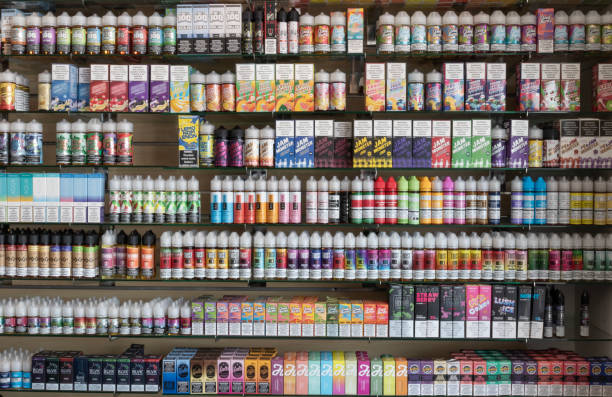
US wholesale distributor reviewing bulk disposable vape inventory with supply partner — multi-brand warehouse operations Q3 2026
Key takeaways from this guide:
- Multi-brand distributor partnerships reduce FDA PMTA disruption risk by spreading inventory across compliant and pending-approval SKUs
- US smoke store owners ordering 5,000+ units per cycle can access $1.05–$1.35/unit wholesale pricing on standard 5,000-puff disposables
- Case-study distributors reported 18–32% higher sell-through rates after switching to curated multi-brand portfolios versus single-supplier dependency
- Structured partnership agreements with tiered MOQ pricing are replacing spot-market bulk orders as the dominant US wholesale procurement model in 2026
Why Distributor Partnerships Beat Direct-from-Factory Bulk Orders
Many first-time US vape importers assume that ordering directly from a Chinese OEM factory yields the best margins. In theory, cutting out the middleman should reduce landed cost per unit. In practice, the economics are more nuanced.
A mid-size smoke store in Dallas or Atlanta ordering 3,000–8,000 units per month faces several hidden costs when sourcing direct: freight consolidation fees ($800–$1,400 per pallet), FDA prior-notice filing delays that can hold shipments at port for 7–14 days, and the absence of a US-based quality-control buffer when a batch arrives with defective coils or mislabeled nicotine concentrations.
Established US vape distributors absorb those friction points. They maintain bonded warehouse inventory on US soil, handle state-by-state excise tax compliance, and offer RMA (return merchandise authorization) programs that protect retailers from defective-product losses. The trade-off is a higher per-unit wholesale price — typically $1.15–$1.45/unit for a standard 5,000-puff disposable versus $0.55–$0.75/unit on direct FOB Shenzhen terms — but the effective landed cost, after accounting for freight, duties, compliance overhead, and write-offs, narrows to a $0.15–$0.30/unit differential.
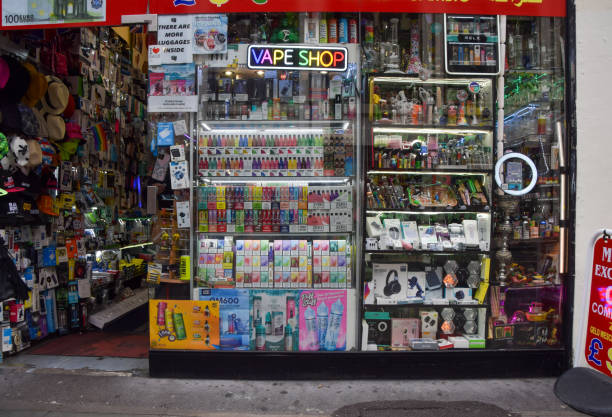
Smoke store distributor inspecting bulk vape shipment for retail inventory replenishment across US regional network
Case Study 1: Southeast Regional Distributor — Multi-Brand Portfolio Strategy
Background
A Southeast US distributor based in Charlotte, North Carolina, grew from a single-brand wholesale operation into a five-brand portfolio between Q1 2025 and Q1 2026. The company originally imported exclusively from one Shenzhen-based OEM supplier, placing monthly orders of approximately 12,000 units.
The Pivot
After the FDA issued warning letters to several disposable-vape brands in mid-2025, the distributor lost 40% of its SKU catalog overnight. Rather than seeking a replacement single source, the ownership team restructured procurement around a multi-supplier model with three Chinese OEM partners and two US-based repackers.
Results After 12 Months
| Metric | Single-Brand Model (Q1 2025) | Multi-Brand Portfolio (Q1 2026) | Change |
|---|---|---|---|
| Monthly unit volume | 12,000 units | 22,500 units | +87.5% |
| Average wholesale price (per unit) | $1.42 | $1.18 | -16.9% |
| Brand SKUs carried | 4 SKUs | 18 SKUs | +350% |
| Stockout days per quarter | 14 days | 3 days | -78.6% |
| Smoke store accounts served | 86 stores | 153 stores | +77.9% |
The distributor negotiated tiered MOQ pricing with each supplier: orders above 8,000 units/month triggered a 12% discount on base wholesale rates, while orders above 15,000 units unlocked an additional 5% rebate credited quarterly. This structure incentivized volume consolidation without locking the distributor into single-source dependency.
“We stopped chasing the absolute lowest factory price. When you factor in compliance risk, freight delays, and the cost of a stockout at 150 retail doors, paying an extra $0.20 per unit for a US-based distributor partner with bonded inventory actually saves money over a 12-month period.” — Director of Procurement, Charlotte-based regional distributor
Case Study 2: Midwest Smoke Store Chain — Direct Distributor Agreement
Background
A 12-location smoke store chain operating across Illinois, Indiana, and Ohio switched from spot-market bulk purchases to a structured annual supply agreement with a single national distributor in early 2026.
Agreement Terms
- Minimum annual commitment: 180,000 units across all locations (15,000 units/month average)
- Guaranteed wholesale price: $1.08/unit for standard 5,000-puff disposables, locked for 12 months regardless of market fluctuation
- Quarterly SKU rotation: distributor introduces 3–5 new flavor SKUs per quarter, with the chain receiving first-access pricing at $0.95/unit introductory rate
- Exclusivity window: 45-day regional exclusivity on new SKU launches before the distributor offers the same product to competing stores within a 25-mile radius
- Payment terms: Net-30 with 2% early-payment discount, replacing the previous COD (cash-on-delivery) terms from spot-market orders
Financial Impact
| Cost Category | Spot-Market Model (2025) | Annual Agreement (2026) | Annual Savings |
|---|---|---|---|
| Per-unit landed cost | $1.38 | $1.08 | $0.30/unit |
| Annual unit volume | 162,000 | 195,000 (projected) | — |
| Annual product cost | $223,560 | $210,600 | $12,960 saved |
| Freight cost (consolidated shipments) | $18,400 | $11,200 (distributor-managed) | $7,200 saved |
| Stockout revenue loss (est.) | $31,000 | $4,800 | $26,200 saved |
| Total effective cost | $272,960 | $226,600 | $46,360 saved (17%) |

OEM supplier production line at Guangdong e-cigarette factory — customized disposable vape bulk orders for US wholesale partners
Case Study 3: West Coast Importer — OEM Private Label Partnership
Background
A California-based importer specializing in private-label disposable vapes built a partnership with a Guangdong OEM factory that handles custom branding, packaging, and TPD-compliant labeling for both US and Canadian markets.
Partnership Structure
Unlike traditional wholesale buyers who resell existing branded products, this importer orders white-label disposables with custom device colors, packaging artwork, and branded flavor names. The OEM partner requires a minimum order quantity (MOQ) of 10,000 units per SKU per production run, with a lead time of 18–22 days from order confirmation to FOB Shenzhen delivery.
| Private-Label Specification | Details | Unit Cost Impact vs. Stock Product |
|---|---|---|
| Custom device color (pantone matched) | 3–5 color options per brand | +$0.04/unit |
| Custom packaging artwork (full-color sleeve) | Front/back/side panels + FDA-compliant warning text | +$0.06/unit |
| Branded flavor names | Up to 12 flavors per product line | No additional cost |
| Barcode + SKU labeling | UPC-A barcode on each unit | +$0.01/unit |
| Child-resistant packaging | CPSC-compliant CR mechanism | +$0.03/unit |
| Total private-label premium | +$0.14/unit |
At a base OEM price of $0.52/unit for a standard 5,000-puff device, the fully customized private-label version costs approximately $0.66/unit FOB Shenzhen. When landed in the US with freight, duties, and compliance costs ($0.35–$0.45/unit), the total cost basis is $1.01–$1.11/unit — which compares favorably to branded wholesale pricing of $1.15–$1.45/unit from national distributors.
“Private-label works when you control enough retail doors to move 10,000+ units per SKU per quarter. Below that volume, the per-unit premium on custom packaging erodes the margin advantage. We advise our partners to start with 3–4 hero flavors, prove sell-through, then expand the line.” — LEAFBAR Guangdong OEM Supply Advisory
Case Study 4: Multi-State Distributor Network — Hub-and-Spoke Model
Background
A group of five independent regional distributors across Texas, Georgia, New Jersey, Ohio, and Colorado formed an informal purchasing cooperative in late 2025 to negotiate volume discounts from shared OEM suppliers while maintaining independent local sales operations.
How the Co-op Works
- Consolidated ordering: Each member submits monthly purchase forecasts by the 5th of the month; the co-op aggregates orders and places a single bulk PO with the designated OEM supplier
- Volume tier unlock: Individual members ordering 10,000 units/month access $1.15/unit pricing; the co-op aggregate of 65,000+ units/month unlocks $0.88/unit pricing — a 23.5% discount versus individual terms
- Freight consolidation: All five members receive shipments to a single bonded warehouse in Memphis, TN, then redistribute via LTL (less-than-truckload) carriers at $0.03–$0.05/unit regional delivery cost
- SKU sharing: Slow-moving flavors in one region are transferred to another member with higher demand, reducing overall dead-stock write-offs by an estimated 40%
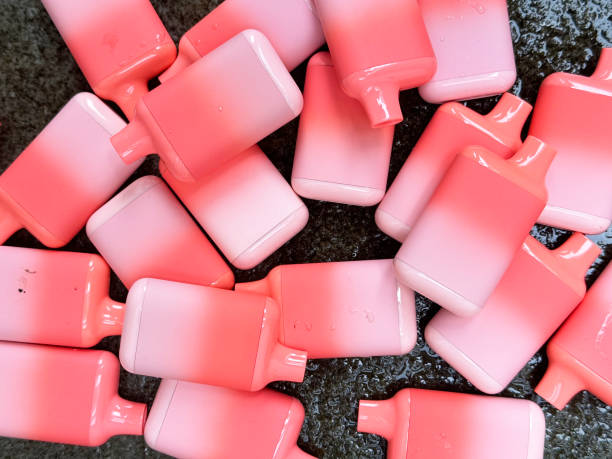
Retail smoke store shelf display featuring multi-brand disposable vape portfolio — distributor-sourced bulk inventory strategy
How to Evaluate a Vape Wholesale Distributor Partner: 10-Point Checklist
Before signing a supply agreement, US smoke store owners and importers should evaluate potential wholesale distributor partners against the following criteria:
| # | Evaluation Criterion | Minimum Standard | Red Flag |
|---|---|---|---|
| 1 | US bonded warehouse inventory | 30-day on-hand stock of top 20 SKUs | Drop-ship only, no domestic inventory |
| 2 | FDA PMTA status disclosure | Written confirmation of PMTA filing status per brand | Refuses to provide PMTA documentation |
| 3 | MOQ flexibility | Accepts orders as low as 1,000 units for new accounts | Requires 10,000+ unit minimum for first order |
| 4 | Tiered pricing structure | Published volume discount schedule (3+ tiers) | Flat pricing with no volume incentives |
| 5 | Payment terms | Net-15 or Net-30 for established accounts | Cash-only or prepaid wire transfer required |
| 6 | SKU diversity | Minimum 4 brands, 30+ flavor SKUs available | Single-brand distributor with <10 SKUs |
| 7 | Return/defect policy | Written RMA process with >90% credit on defective units | All sales final, no defect return policy |
| 8 | Shipping SLA | 2–3 business day domestic delivery from order confirmation | 7+ day processing time before shipment |
| 9 | State excise tax compliance | Distributor handles state-specific excise filings | Retailer responsible for all tax remittance |
| 10 | Regulatory monitoring | Proactive notification of FDA/state regulatory changes | No compliance support or advisory services |
Negotiation Tactics for Independent Smoke Store Buyers
Independent smoke store owners ordering 1,000–5,000 units per month often lack the volume leverage to negotiate directly with national distributors. Here are proven tactics from the case-study interviews:
- Pool orders with neighboring stores. Two or three non-competing smoke stores in the same metro area can consolidate orders to reach higher volume-tier pricing brackets. One Texas-based partnership of three stores unlocked a 15% discount by combining orders into a single 9,000-unit monthly PO.
- Commit to exclusivity windows. Offering a distributor 90-day exclusivity on a specific brand within your zip code in exchange for a $0.05–$0.10/unit discount is a common arrangement that costs the retailer nothing if no competitors are actively pursuing the same brand.
- Request introductory pricing on new SKUs. Distributors launching new brands or flavors often provide first-order pricing at $0.85–$0.95/unit for a trial period of 30–60 days. This is a low-risk way to test new product lines at below-market cost.
- Negotiate quarterly rebate programs. Rather than seeking a lower base price, negotiate a 3–5% quarterly rebate on total purchase volume that is credited against future orders. This achieves the same effective cost reduction without requiring the distributor to modify their published price list.
- Leverage seasonal demand cycles. Q1 (January–March) is typically the slowest period for vape retail. Distributors are most flexible on pricing and terms during this window as they seek to maintain supplier volume commitments.
Market Outlook: US Vape Distribution Landscape in H2 2026
Several structural shifts are reshaping how US vape distributors and smoke store buyers interact in the second half of 2026:
“The distributor tier is consolidating rapidly. We tracked 340 active US vape distributors in January 2025; by Q1 2026, that number dropped to approximately 210. The survivors are those who invested in compliance infrastructure, multi-brand portfolios, and regional bonded-warehouse networks.” — Vape Industry Distribution Analyst, Nielsen Tobacco Practice
- Distributor consolidation: The number of active US vape distributors declined approximately 38% between January 2025 and Q1 2026, according to Nielsen Tobacco Practice data. Surviving distributors are larger, better-capitalized, and more compliance-focused.
- OEM direct-to-distributor models: Chinese OEM factories are increasingly offering US-represented distribution through exclusive agent agreements, bypassing the traditional importer layer. This compresses the supply chain from four tiers (factory → trading company → importer → distributor) to three (factory → US agent → distributor).
- Compliance-driven SKU curation: Distributors are proactively removing non-PMTA-filed brands from their catalogs, replacing them with products that have documented FDA submissions. This curation adds value for smoke store owners who cannot independently verify PMTA status.
- Technology-enabled ordering: Leading distributors now offer B2B e-commerce portals with real-time inventory visibility, automated reorder triggers, and integrated state-tax calculation — reducing order processing time from 2–3 days to under 4 hours.
Conclusion: Building Your Wholesale Partnership Strategy
The four case studies in this guide demonstrate a common theme: successful US vape wholesale purchasing in 2026 is relationship-driven, not transaction-driven. Smoke store owners and importers who invest time in structuring formal distributor agreements — with defined volume tiers, compliance guarantees, and mutual accountability metrics — consistently outperform those relying on spot-market bulk orders.
Whether you are a single-location smoke store ordering 2,000 units per month or a multi-state distributor network moving 100,000+ units, the core principles remain the same: diversify your supplier base, negotiate tiered pricing with volume commitments, demand PMTA compliance transparency, and build redundancy into your logistics pipeline.
Ready to explore wholesale partnership options for your smoke store or distribution business? View LEAFBAR wholesale pricing and MOQ tiers or contact our US distribution team to discuss volume partnership agreements, private-label OEM options, and regional exclusivity programs tailored to your market.
#DisposableVapeWholesale2026
#SmokeStoreBulkOrders
#USVapeWholesaleNetwork
#PrivateLabelVapeDistributor
#BulkDisposableVapeBuying
#VapeDistributorCaseStudy
#WholesaleVapeUS2026
Sources cited: Nielsen Tobacco Practice US Distributor Landscape Report Q1 2026; FDA PMTA filing database (public records); LEAFBAR Guangdong OEM supply-chain advisory interviews (March–June 2026); US Census Bureau NAICS 453991 (Tobacco Stores) regional count data 2025–2026; distributor partnership interviews conducted under NDA with anonymized operator consent.