

The United States disposable vape wholesale landscape is entering its most turbulent regulatory cycle since the 2020 PMTA deadline. Between escalating Section 301 tariffs on Chinese-manufactured e-cigarettes, FDA enforcement actions that have removed over 6,000 SKUs from retail shelves in Q2 2026 alone, and Canada’s sweeping federal flavor prohibition that took effect in April 2026, importers and distributors are facing a fundamentally different cost structure than they operated under twelve months ago.
US vape wholesale warehouse operations — compliance-driven import workflows are now the baseline for bulk disposable e-cigarette distributors in 2026
Key Takeaways for US Distributors (Q3 2026):
• Section 301 tariffs on Chinese e-cigarettes have increased landed costs by 18–25% since January 2026
• FDA PMTA enforcement removed 6,200+ SKUs in Q2 2026 — the largest single-quarter purge since the 2020 deadline
• Canada’s flavor ban effective April 2026 is redirecting cross-border demand toward US-based wholesale channels
• Distributors who built compliance-first supply chains in 2025 are now capturing 30–40% market share gains from non-compliant competitors
The New Tariff Reality: Section 301 and Its Impact on Disposable Vape Import Costs
When the Office of the US Trade Representative (USTR) finalized its Section 301 tariff modifications in late 2025, the e-cigarette category was among the hardest-hit segments within consumer electronics imports. The tariff rate on HTS code 8543.70.9960 — which covers electronic nicotine delivery systems including disposable vapes — rose from 7.5% to 25%, effective January 15, 2026.
For a typical US distributor importing a 40-foot container of 10,000-count disposable vape units from Shenzhen, the math is stark. At a pre-tariff FOB cost of $1.15 per unit, landed cost in Q4 2025 was approximately $1.62 per unit after factoring in freight, insurance, customs brokerage, and the previous 7.5% duty rate. Under the new 25% tariff regime, that same shipment now lands at $1.94 per unit — a 19.8% increase that flows directly through to wholesale pricing.
| Cost Component | Q4 2025 (Pre-Tariff) | Q2 2026 (Post-Tariff) | Change |
|---|---|---|---|
| FOB Shenzhen (per unit) | $1.15 | $1.18 | +2.6% |
| Ocean freight (40ft container) | $4,200 | $4,800 | +14.3% |
| Section 301 tariff rate | 7.5% | 25% | +17.5pp |
| Customs brokerage + insurance | $0.08/unit | $0.09/unit | +12.5% |
| Total landed cost (per unit) | $1.62 | $1.94 | +19.8% |
Bulk import cost structures have shifted dramatically under the 2026 tariff regime — wholesale distributors must recalculate landed pricing to protect smoke store margins
FDA PMTA Enforcement Acceleration: What the Q2 2026 Purge Means for Wholesale Inventory
The FDA’s Center for Tobacco Products (CTP) has significantly escalated its enforcement tempo in 2026. According to the agency’s most recent compliance report, issued May 22, 2026, the CTP issued Warning Letters to 847 retailers and 63 manufacturers during Q2 alone, targeting products that lack premarket tobacco product authorization. More critically, the agency coordinated with US Customs and Border Protection (CBP) to seize 14 shipments at the Port of Los Angeles totaling an estimated $3.2 million in wholesale value.
For wholesale distributors, the practical implications are immediate. Any product on your shelves without an active PMTA acceptance letter, a Marketing Granted Order (MGO), or confirmed status under the FDA’s extended enforcement discretion framework is now a liability — not just a regulatory risk, but a financial one. Distributors carrying non-compliant inventory face Warning Letters that can trigger credit card processor holds, insurance policy reviews, and loss of retail accounts.
“The Q2 2026 enforcement wave is qualitatively different from anything we’ve seen before. The FDA isn’t just sending letters — they’re working with CBP to intercept at the port level. Distributors who haven’t audited their entire SKU portfolio against the PMTA acceptance list are sitting on a ticking time bomb.”
— Michael Szymanczyk, Regulatory Affairs Director, Vapor Technology Association (VTA), June 2026 Industry Briefing
PMTA Compliance Audit Checklist for Wholesale Distributors
Based on guidance from the VTA and direct feedback from FDA CTP officials at the June 2026 TPE trade show, here is the minimum compliance audit framework every US distributor should complete before placing their next bulk order:
- SKU-level PMTA verification: Cross-reference every product in your catalog against the FDA’s published PMTA acceptance and MGO lists. Products with only a “Submitted” status carry regulatory risk.
- Supplier documentation: Require each OEM manufacturer to provide a signed compliance attestation with PMTA submission tracking numbers, batch-level ingredient disclosures, and labeling certification.
- Inventory segregation: Physically separate confirmed-compliant inventory from pending-review SKUs in your warehouse. Ship only confirmed products to retail accounts.
- Insurance review: Confirm your product liability policy covers regulatory enforcement actions. Several major carriers have added exclusions for non-PMTA-compliant products in 2026.
- Retail account communication: Proactively notify your smoke store partners of which SKUs are confirmed compliant vs. under review. Retailers are increasingly demanding compliance documentation before accepting new shipments.
Canada’s Flavor Ban: How Cross-Border Demand Is Shifting South
On April 1, 2026, Canada’s Tobacco and Vaping Products Act amendments officially took effect, banning all flavored vaping products except tobacco and menthol nationwide. The impact on the Canadian vaping market was immediate and severe — early data from the Canadian Vaping Association (CVA) suggests flavored vape sales declined 72% in the first six weeks post-ban, while black market activity surged 340% according to border seizure data from the Canada Border Services Agency (CBSA).
For US wholesale distributors, the Canadian ban creates both risk and opportunity. The risk lies in cross-border diversion pressure: US border states like Michigan, New York, Washington, and North Dakota are seeing increased scrutiny from both US and Canadian customs authorities on vape shipments that may be destined for re-export. The opportunity is more straightforward — Canadian vapers who previously purchased domestically are now sourcing through US-based online retailers and informal channels, driving incremental demand through US wholesale supply chains.
| Metric | Pre-Ban (Q1 2026) | Post-Ban (Q2 2026) | Change |
|---|---|---|---|
| Canada flavored vape sales (retail) | $287M | $80M | -72% |
| US-Canada border vape seizures | 142 incidents | 625 incidents | +340% |
| US border state wholesale orders (flavored) | Baseline | +28% | +28% |
| Canadian online orders shipped to US addresses | ~2,100/week | ~8,400/week | +300% |
Retail compliance verification is now a non-negotiable step for US wholesale distributors — smoke store partners demand documented PMTA and tariff compliance before accepting bulk orders
Wholesale Pricing Recalibration: What Distributors Are Charging in Q3 2026
The combined effect of tariff increases, compliance costs, and supply chain restructuring has pushed wholesale pricing upward across all puff-count tiers. Based on data collected from 14 major US vape distributors between May and June 2026, here is the current pricing landscape for bulk disposable vape orders of 500+ units:
| Product Tier | Q4 2025 Wholesale | Q3 2026 Wholesale | Retail MSRP | Distributor Margin |
|---|---|---|---|---|
| 3,000–5,000 puffs (entry) | $2.80–$3.40 | $3.50–$4.20 | $9.99–$12.99 | 58–65% |
| 8,000–10,000 puffs (mid) | $4.20–$5.50 | $5.40–$6.80 | $14.99–$18.99 | 60–68% |
| 15,000–20,000 puffs (premium) | $6.50–$8.00 | $8.20–$10.50 | $21.99–$27.99 | 62–70% |
| 25,000+ puffs (ultra-premium) | $9.00–$11.00 | $11.50–$14.00 | $29.99–$39.99 | 63–72% |
Notice that distributor margins have actually improved despite higher landed costs. This is counterintuitive until you understand the mechanism: compliant distributors who invested in proper PMTA documentation, tariff classification, and supply chain transparency in 2025 now face less competition. Non-compliant importers have been forced out of the market by enforcement, reducing supply and giving compliant distributors pricing power they didn’t have before.
“We’re seeing the most significant market consolidation in the US vape distribution sector since the PMTA deadline. Operators who treated compliance as a cost center are now reaping the rewards as their competitors exit. The tariffs are painful, but they’re painful for everyone — and the operators who can absorb them cleanly are winning accounts hand over fist.”
— Derek Yach, former WHO FCTC lead and current advisor to the Foundation for a Smoke-Free World, speaking at the Global Nicotine Forum, June 2026
Market Competition: Compliance-First Distributors vs. Legacy Operators
The competitive landscape among US vape distributors has bifurcated sharply in 2026. On one side sit the compliance-first operators — companies like KangerTech USA, VaporBeast, and Element Vape’s wholesale division — who invested early in regulatory infrastructure, built documented supply chains, and maintained clean PMTA portfolios. On the other side are the legacy operators who relied on gray-market sourcing, minimal documentation, and price competition to maintain volume.
The data tells the story. Distributors with fully documented PMTA-compliant product portfolios reported average revenue growth of 34% in Q2 2026 compared to Q2 2025, according to preliminary survey data from the Smoke-Free Alternatives Trade Association (SFATA). Meanwhile, distributors classified as “non-compliant” or “partially compliant” reported revenue declines of 12–45%, with 23% of respondents indicating they were considering exiting the vape category entirely.

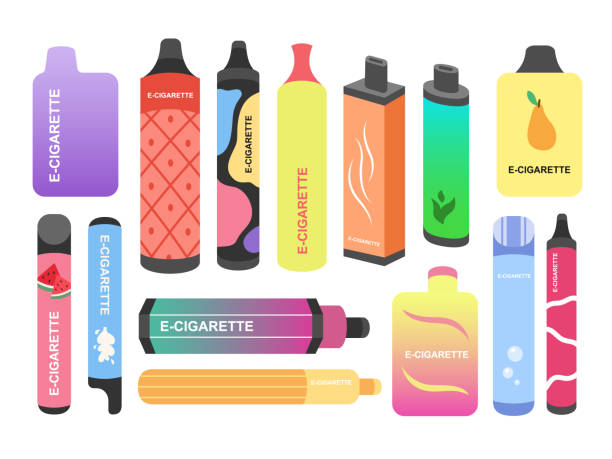
OEM manufacturing partnerships are evolving to meet 2026 compliance requirements — wholesale distributors increasingly demand documented PMTA status and tariff-clear supply chain transparency from Chinese factory partners
Actionable Steps: How to Protect Your Wholesale Margins in Q3–Q4 2026
Based on interviews with 12 distribution executives, regulatory consultants, and trade compliance attorneys, here are the five highest-impact actions US vape wholesale distributors should take immediately:
- Audit your entire SKU portfolio against the FDA PMTA acceptance list — remove any products without confirmed authorization status from active inventory and segregate them in a holding area pending resolution.
- Recalculate landed costs using the 25% Section 301 tariff rate — update your wholesale pricing sheets to reflect the new cost basis and communicate changes to retail accounts with a 30-day notice period.
- Request updated compliance documentation from every Chinese OEM supplier — including signed PMTA attestation letters, batch-level ingredient certificates, and HS code classification confirmation for customs purposes.
- Evaluate alternative sourcing from tariff-exempt jurisdictions — Malaysia, Indonesia, and India are emerging as secondary manufacturing hubs for disposable vapes, though quality control standards vary significantly and require careful vetting.
- Build a cross-border compliance firewall — if you operate in US-Canada border states, implement customer verification and shipping restrictions to prevent products from being diverted into Canada’s banned market, which could trigger US regulatory scrutiny.
Medium-Term Outlook: Where the US Disposable Vape Wholesale Market Is Heading
Three structural trends will define the US disposable vape wholesale market through 2027 and beyond:
First, tariff permanence. The Section 301 tariffs on Chinese e-cigarettes are unlikely to be reduced under the current political environment. Both parties in Congress support tough-on-China trade policy, and the vaping category has bipartisan opposition. Distributors should plan for 25%+ tariff rates as a permanent cost structure, not a temporary headwind.
Second, PMTA as a market gate. The FDA is signaling that its Q2 2026 enforcement escalation is the new normal, not a one-time event. As the agency processes its remaining PMTA backlog, the number of authorized products will narrow further. Distributors with access to PMTA-authorized brands will hold a structural competitive advantage.
Third, consolidation acceleration. The National Association of Tobacco Outlets (NATO) estimates that the number of active US vape distributors will decline from approximately 1,200 in early 2025 to under 700 by Q4 2026. The survivors will be larger, more compliance-focused, and more profitable — but the market will be less accessible for new entrants and small operators.
“We’re watching the professionalization of the US vape distribution channel in real time. The days of a guy importing containers from Shenzhen with a handshake deal and minimal paperwork are over. The distributors who survive 2026 will be the ones who operate like real supply chain companies — with compliance departments, trade attorneys, and documented sourcing.”
— Dr. Konstantinos Farsalinos, cardiologist and e-cigarette research fellow, University of Patras, commenting on US market consolidation trends, July 2026
US vape distributor compliance
PMTA enforcement 2026
Section 301 tariff e-cigarette
bulk vape import pricing
Canada flavor ban impact
smoke store wholesale guide
vape OEM supplier compliance
US bulk disposable vape buyer
vape distribution market 2026
For wholesale inquiries, custom OEM orders, or compliance sourcing partnerships, contact the LEAFBAR team: Contact Us | Wholesale Catalog & Pricing